



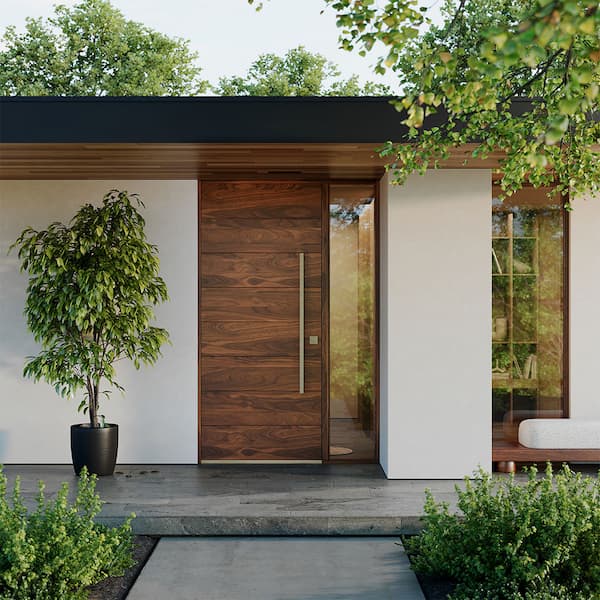








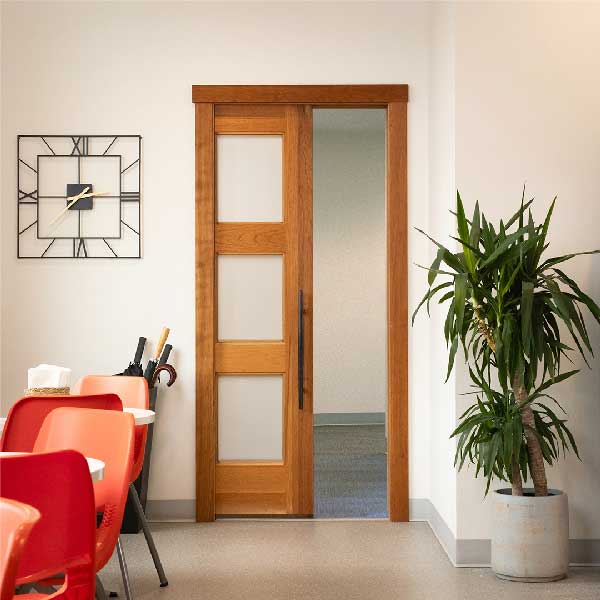










A French door isn't just a door with glass. When it's done right — solid wood, mortise and tenon joinery, true divided lights with real wood mullions — it changes how a room breathes. It pulls daylight low across the floor. It makes the threshold between inside and outside feel less like a wall and more like an invitation.
The short answer: most exterior French doors on the market are veneer over engineered cores, or fiberglass, or vinyl. They look the part in a catalog photo. But close one. Listen. If it sounds hollow, if it rattles in the frame, if the glass is just a single slab with snap-on plastic grilles — that's not a French door. That's a prop.
Every exterior French door we build at RealCraft is milled from true timber — solid wood the full thickness of the door, minimum 2 inches. No foam cores. No veneers over MDF. No shortcuts. We use mortise and tenon joinery on every door, the traditional standard for structural integrity that manufacturers focused on cutting costs don't have patience for. Each door is built by hand in our shop in Gig Harbor, Washington, and shipped anywhere in the country — free on orders over $399.
At a GlanceSolid wood through the entire door — 2" minimum. No veneer, no MDF, no engineered fill. Real wood can be refinished, repaired, and restored over decades. A scratch on veneer is permanent. A scratch on solid wood is just character until you decide to sand it out.
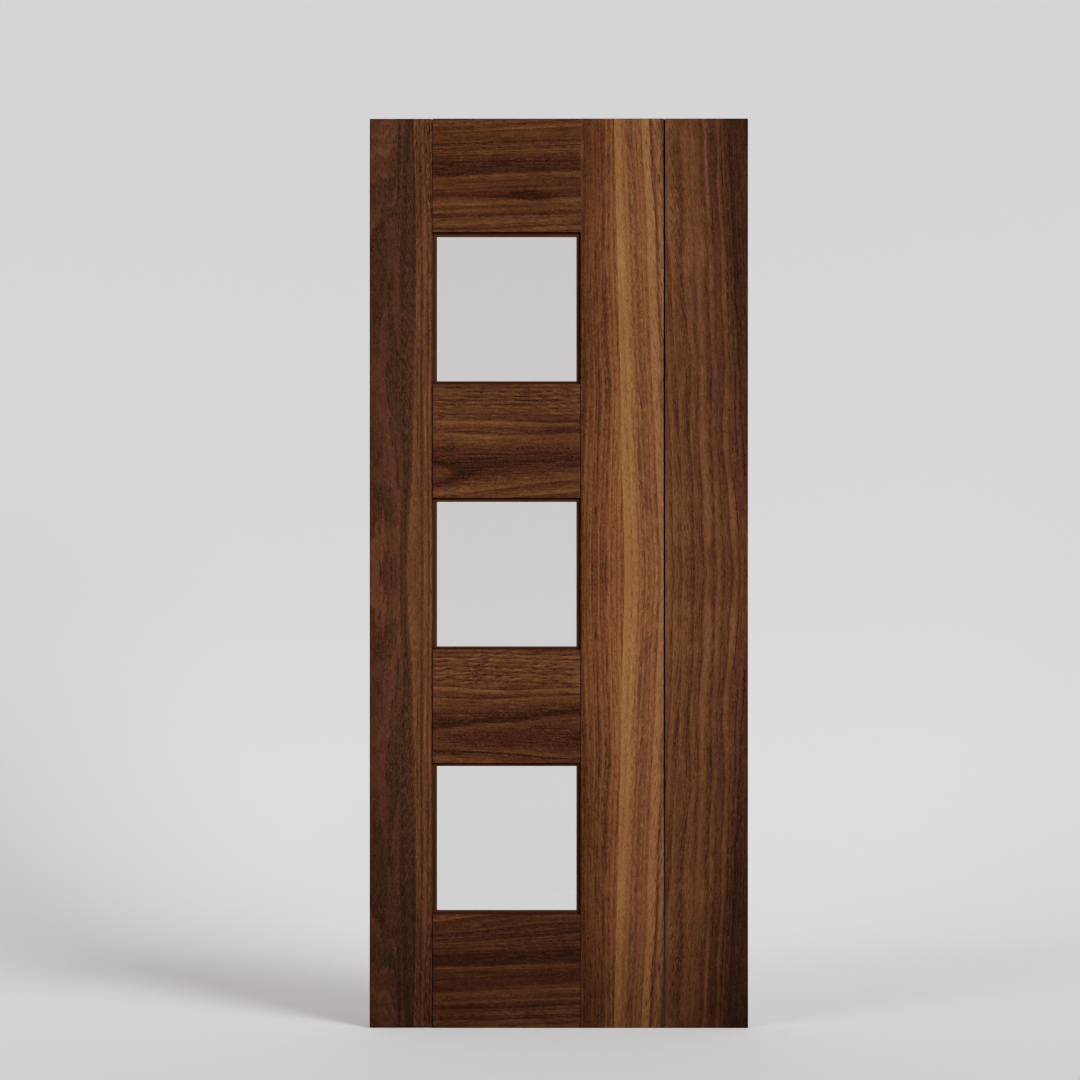
Individual panes of glass separated by real wood mullions — not a single sheet with snap-on plastic grilles. The difference is visible from six feet away and unmistakable up close. Light passes through differently. Shadows fall differently. It reads as authentic because it is. For a deeper look at glass options, read Door Glass 101 on The Artisan's Journal.
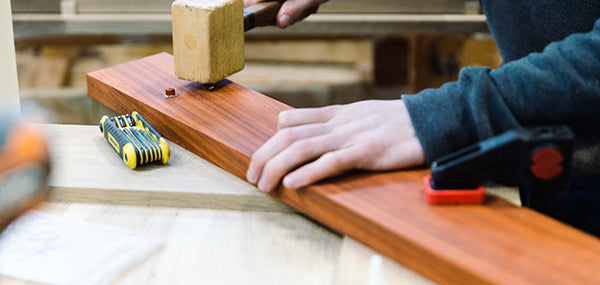
Every joint on every door uses mortise and tenon construction — where a tenon is cut to fit precisely into a mortise pocket. It requires specialized skills and machinery. It takes longer. It's also the reason these doors don't sag, shift, or separate at the seams after five winters.
Every RealCraft exterior French door ships with a White Oak threshold. White Oak is naturally water-repellent — water beads and rolls off rather than soaking in. It's a small detail most manufacturers skip, and it's the first place water damage shows up on cheaper doors.
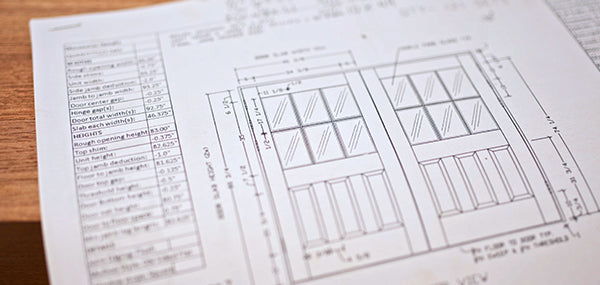
We don't make you shim a rough opening to fit a stock size. Every door is built to your exact dimensions. Single doors. Double doors. Unusual widths. Tall openings. If the opening exists, we'll build the door to fit it — not the other way around.
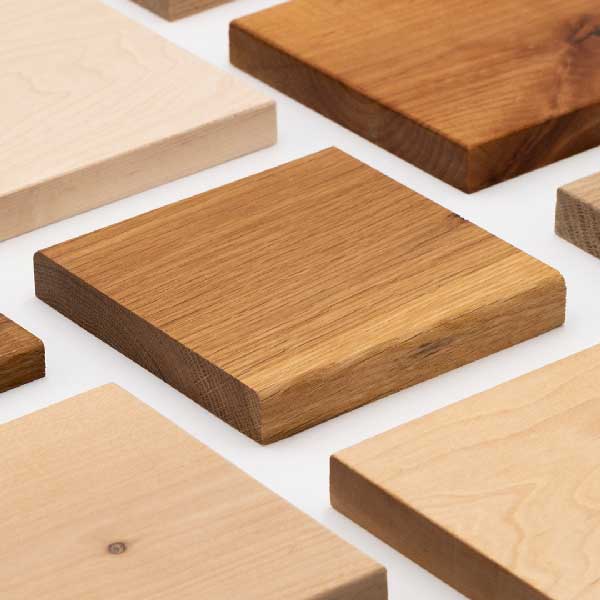
Choose from 20 wood species — American classics like White Oak and Black Walnut, exotics like Sapele Mahogany and Wenge, and sustainable options like Accoya. Apply one of 8 oil-based stain finishes, or leave the wood natural with a clear coat. See the grain before you commit: order wood samples — 5 for $25 with free shipping, includes $100 credit toward your door.
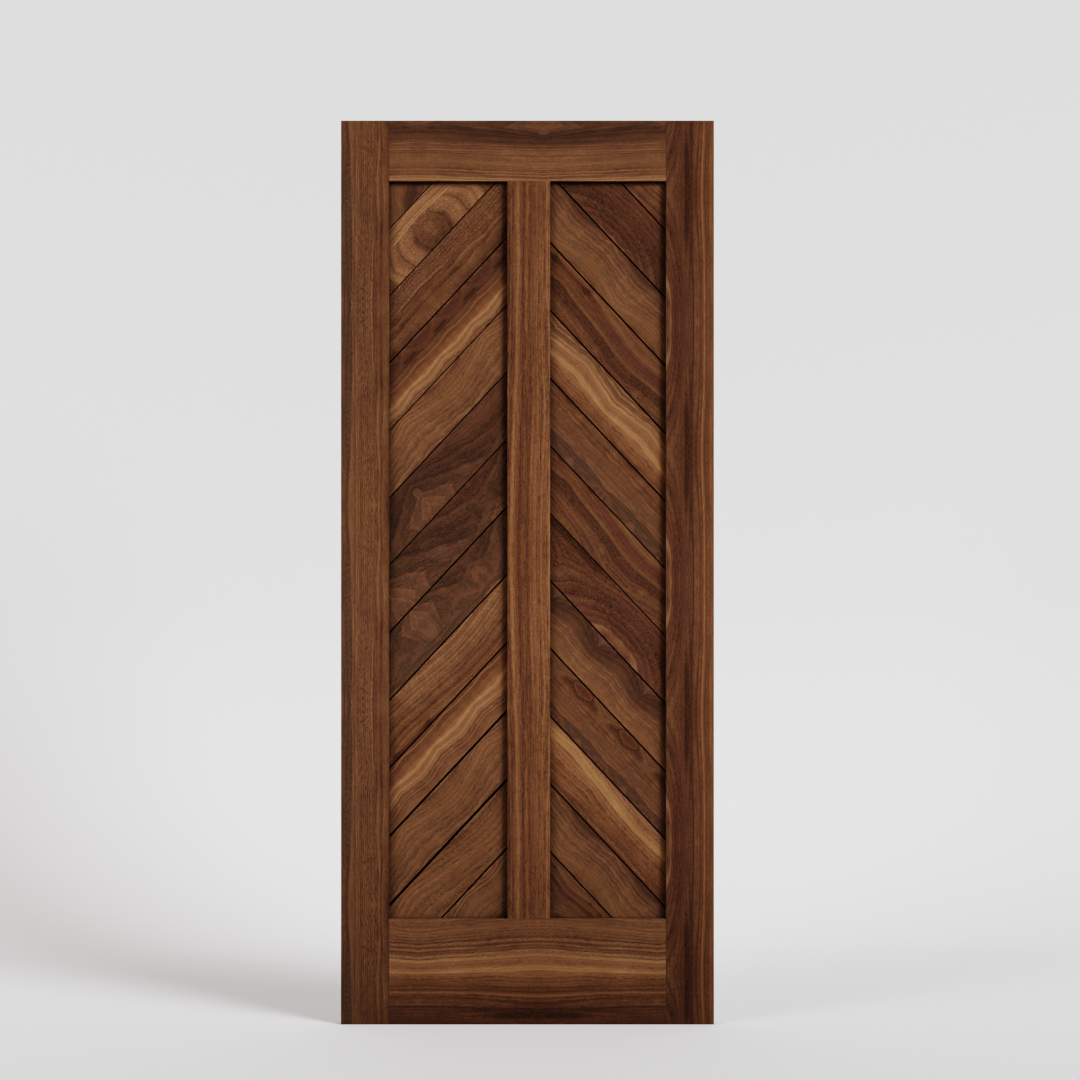
Door ConfigurationOne door leaf, hinged on one side. Works for standard 3-foot openings, side entries, transitions from kitchen to patio, or anywhere a double door would overwhelm the space. All four models — Zola, Hugo, Colette, Baudelaire — are available as single doors starting between $2,644 and $3,735. Single French doors keep the glass-and-wood aesthetic without requiring the wall space or budget of a double configuration. They swing in or out depending on your climate and floorplan.
Two door leaves meeting at the center. The classic French door configuration. Both panels can be operable, or one can be fixed with the other serving as the active door. Double doors start between $4,887 and $7,070. Double French doors make sense when the opening is wide enough to justify them — typically 5 feet or more — and when the architecture calls for symmetry. A double French door on a grand entry or a dining room-to-patio transition changes how the whole floorplan feels. It blurs the line between interior and exterior in a way a single door can't match.
Not sure which configuration fits your home? Take the Entry Door Finder Quiz — 90 seconds, no guesswork. For fully custom designs beyond the standard collection, explore RealCraft Reserve.
MaterialsThe safest choices for exterior exposure are species with natural decay resistance and dimensional stability.
White Oak is the benchmark — dense, water-repellent, and stable through seasonal shifts. It's the same species we use for every threshold. Sapele Mahogany offers similar durability with a darker, more formal appearance and interlocking grain that resists warping. Western Red Cedar and Spanish Cedar are lighter-weight options with excellent rot resistance, though they're softer and will show wear faster on high-traffic doors.
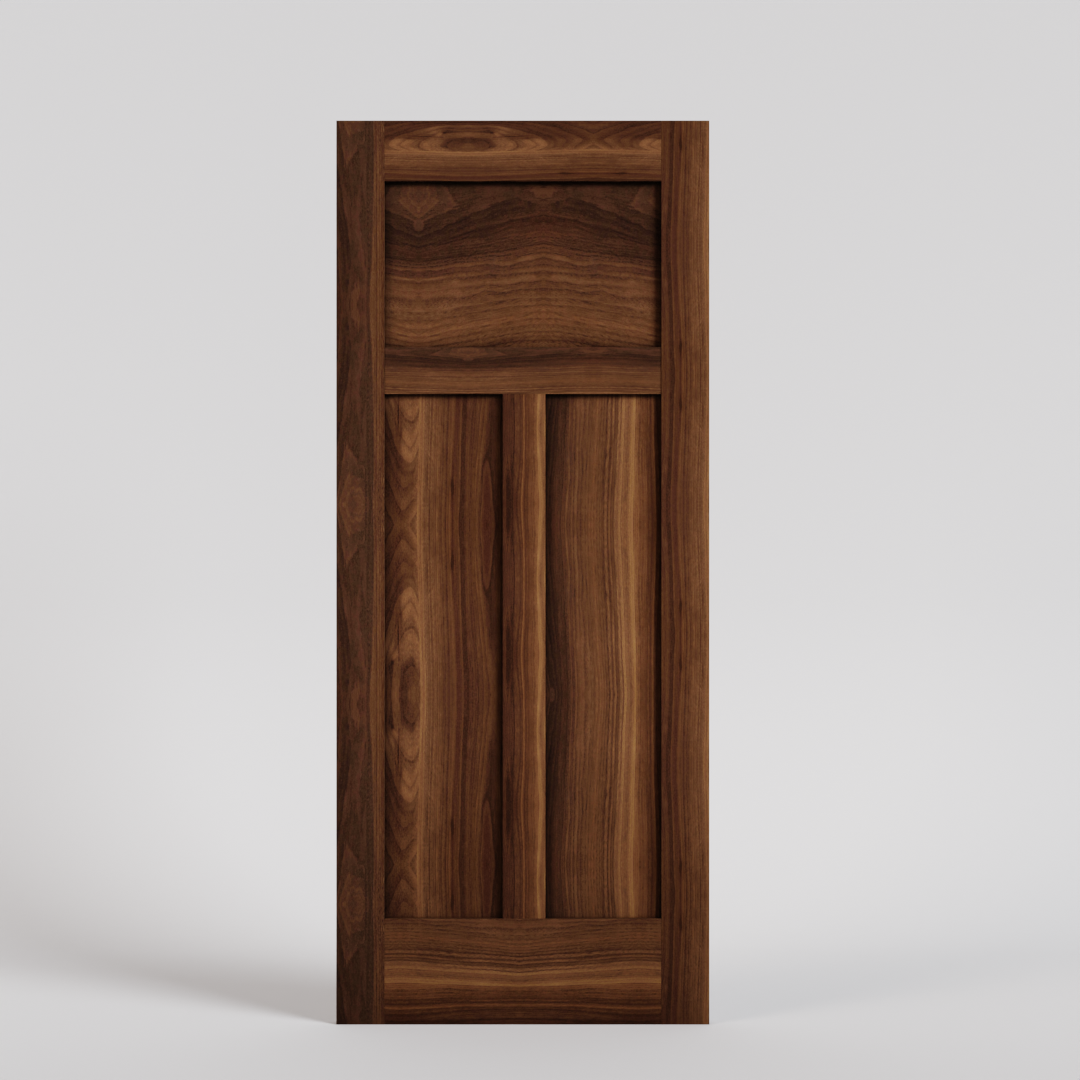
For coastal or high-humidity environments, Accoya — acetylated Radiata Pine — offers exceptional stability with a 50-year warranty against rot. Black Walnut is stunning but works best on covered entries protected from direct rain. Douglas Fir offers strong vertical grain and historical authenticity for Craftsman and period homes.
See all 20 species with detailed Janka hardness ratings and climate suitability. Order wood samples — 5 for $25 with free shipping — before you decide. The $100 credit applies toward your door purchase either way.
FAQYes — when they're built correctly. The vulnerability of exterior wood doors isn't the wood itself; it's water wicking into end grain at the bottom of the stiles. We address this with a White Oak threshold on every exterior French door. White Oak is naturally water-repellent — water beads and rolls off rather than penetrating. Beyond the threshold, mortise and tenon joinery keeps the door structurally stable through seasonal expansion and contraction. With proper finishing and occasional maintenance, a solid wood French door will outlast fiberglass — and unlike fiberglass, it can be refinished rather than replaced if it weathers.
True divided lights (TDL) use individual panes of glass separated by real wood mullions. Each pane sits in its own rabbet. Simulated divided lights (SDL) use a single large sheet of glass with snap-on grilles applied to the surface — sometimes on both sides, sometimes just one. From a distance they can look similar. Up close, TDL casts real shadows, has depth, and reads as a crafted object rather than a manufactured one. Every RealCraft French door uses true divided glass lights with wood mullions. We don't do snap-on grilles. Read Door Glass 101 for the full breakdown.
Yes. Solid wood is a natural insulator — it outperforms aluminum and vinyl in thermal resistance. Our French doors are 2" thick minimum, which provides a substantial thermal break compared to the thinner slabs on mass-market doors. We offer low-E insulated glass units that meet or exceed ENERGY STAR requirements for most climate zones. The weatherstripping matters as much as the glass. Our doors use compression bulb weatherstripping around the full perimeter. Double doors include an astragal — the vertical strip where the two leaves meet — with integrated weatherstripping to seal the center joint.
RealCraft exterior French doors start at $2,644 for a single Zola Half Glass door, and range up to $7,070 for a Baudelaire Double Glass double door configuration. These are starting prices for the door slab — your final price depends on the wood species, dimensions, glass type, finish, and hardware selections. Custom sizing is standard — we don't charge a premium for building to your exact opening. For context: mass-market fiberglass French doors from big-box retailers start lower but top out around $4,000–$5,000 for pre-finished units in stock sizes.
White Oak is the benchmark — dense, water-repellent, and dimensionally stable. Sapele Mahogany offers similar durability with a darker, more formal appearance. Western Red Cedar and Spanish Cedar provide excellent rot resistance at lighter weight, though they're softer. Accoya offers exceptional stability for coastal environments with a 50-year rot warranty. Black Walnut works best on covered entries. See all 20 species with Janka hardness ratings. Order wood samples — 5 for $25 with free shipping and a $100 credit toward your door.
In-swing is the traditional American standard. The doors open into the room. It keeps the exterior face of the door protected by an overhang or porch and prevents weather from pushing against the weatherstripping. In-swing requires interior floor clearance — you can't place furniture in the swing path. Out-swing saves interior floor space and compresses the weatherstripping tighter against wind pressure. It's common in coastal and high-wind zones. Out-swing doors need a covered entry or deep overhang — without one, rain and snow accumulate against the door and accelerate wear at the threshold. RealCraft builds both configurations. Our standard is in-swing; out-swing is available on request.
Every RealCraft exterior French door is made by hand from solid wood — your dimensions, your species, your glass configuration. Mortise and tenon joinery. True divided lights. White Oak threshold. 25 trees planted for every door sold. Free shipping on orders over $399.
Browse the Collection Order Wood Samples — 5 for $25


