























Most articles comparing entry door materials read like they were written by someone who's never actually built a door. They'll tell you fiberglass is "just as good as wood" and throw around phrases like "low maintenance" as if that settles it. They won't tell you what the word "wood" even means on a product page. And they certainly won't admit that the comparison depends heavily on what kind of wood door you're talking about.
The short answer: A fiberglass door costs less today and asks nothing of you. A solid wood door costs more upfront and lasts generations — but only if it's actually solid wood, not a veneer skin over MDF. The comparison that matters isn't wood vs. fiberglass. It's real wood vs. everything else that uses the word.
The long answer:A solid wood door built with mortise and tenon joinery from true timber shares almost nothing in common with a big-box "wood" door made from a veneer skin stretched over MDF and foam. Conflating the two is like comparing a furniture-grade dining table to something flat-packed in a box. Same word. Radically different thing.
Not sure how to tell solid wood from veneer? We wrote a separate guide on telling the difference — with six diagnostic checks you can use on any door.
The DistinctionWhat "Solid Wood Door" Actually Means (And What It Doesn't)
The phrase "wood door" covers an enormous range of quality, and most of it isn't wood at all. Walk through any home center and you'll find doors labeled "wood" that are actually veneer skins glued over medium-density fiberboard, particleboard, or polyurethane foam cores. They look like wood from across the room. They're priced like entry-level products. And they will not perform like solid wood over time.
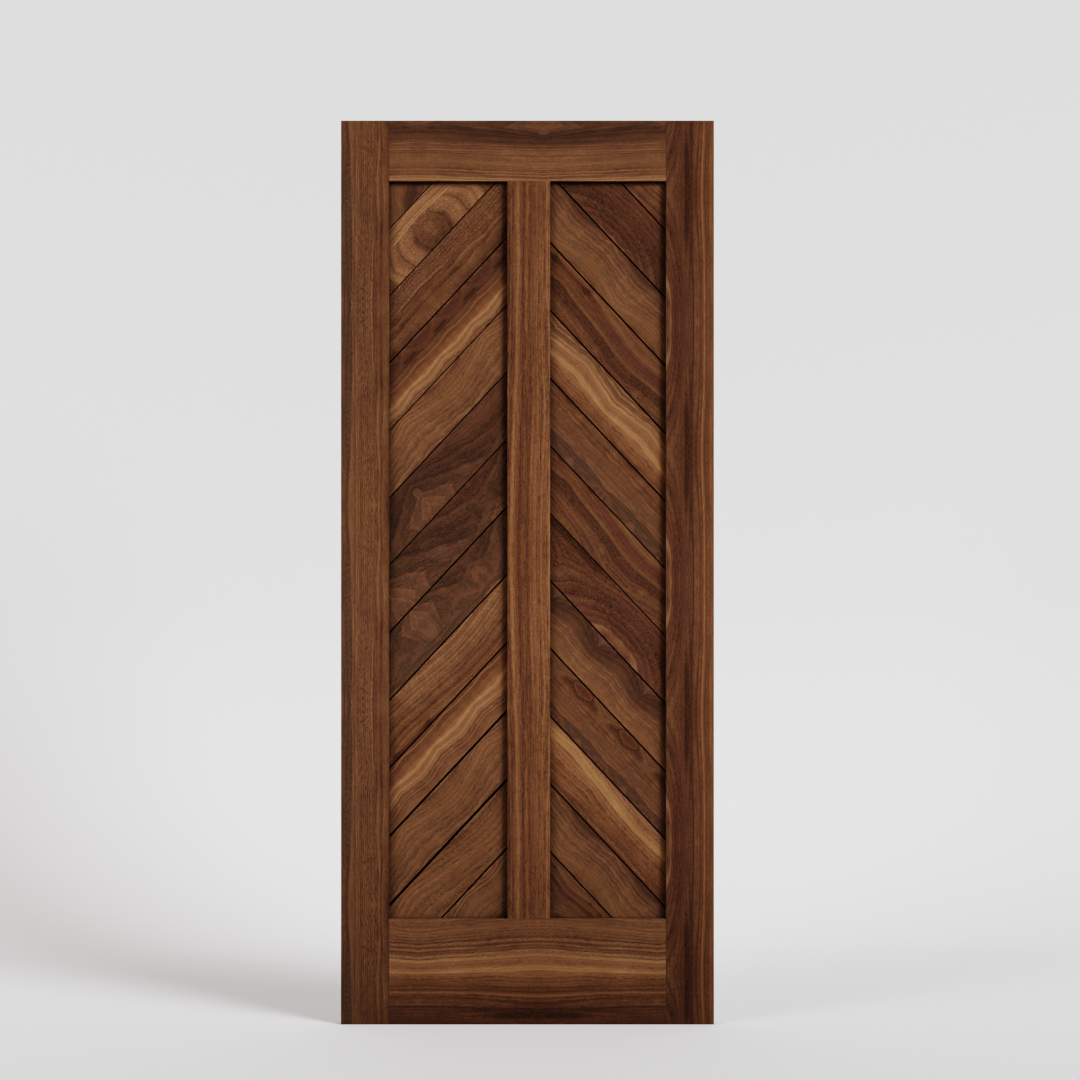
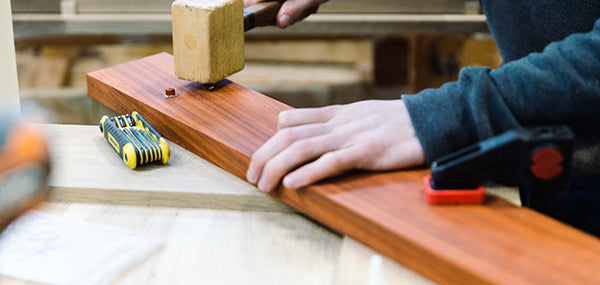
True solid wood — what the trade calls true timber — is milled from solid pieces of raw lumber. This lumber comprises the full thickness of the door. No fillers, no veneers over MDF, no foam cores or shortcuts. At RealCraft, every door starts as rough-sawn hardwood, milled to 2 inches or thicker, joined with mortise and tenon construction where a tenon fits into a precisely cut mortise pocket. That's the traditional standard for strength, and it requires specialized skills and machinery. [Manufacturers focused on cutting costs don't have patience for specialized skills.](/blogs/articles/who-still-makes-solid-wood-doors-and-why-it-matters)
Why does this matter for the comparison? Because a fiberglass door is competing against that commodity "wood" door at the bottom of the market. It is not competing against a true timber door. And when you compare fiberglass against that lower tier, fiberglass looks great. When you compare it against solid wood built the right way, the story changes.
The FrameworkThe Five Factors That Actually Matter
Five things determine whether a front door was the right choice: how long it lasts, what it costs, how it looks and feels, whether you can fix it when something goes wrong, and how it performs thermally. Everything else is noise.
Durability & Lifespan
Durability. Fiberglass doors are commonly cited at 20 to 30-plus years, with some manufacturers floating 50-year marketing claims. A solid wood door, properly built and maintained, can serve 30 to 100 years or more. The critical word in that sentence is "maintained." A neglected wood door exposed to weather without a functional finish or overhang can fail in under a decade. Fiberglass doesn't care about neglect the same way. It won't rot. That's a real advantage, and pretending otherwise would be dishonest. But a fiberglass door that takes a hard impact or develops structural cracking at the stile is generally a replacement job. A wood door in the same situation is a repair job, and that difference compounds over decades.
Warranties tell the same story from the manufacturer's side. Major fiberglass brands offer lifetime limited warranties on the slab — Therma-Tru is the biggest name here, and their warranty page confirms the lifetime coverage. But lifetime limited means limited. Read the exclusions on components, finish, and glass, and the real commitment narrows considerably. Solid wood door warranties from mass-market manufacturers are often shorter, typically 1 to 10 years, precisely because wood responds to its environment and warranty exclusions for moisture damage and warping are broad. A custom door builder's warranty is different — it's a relationship with the shop that built it, not a call-center claim process.
Cost: Upfront vs. Lifetime
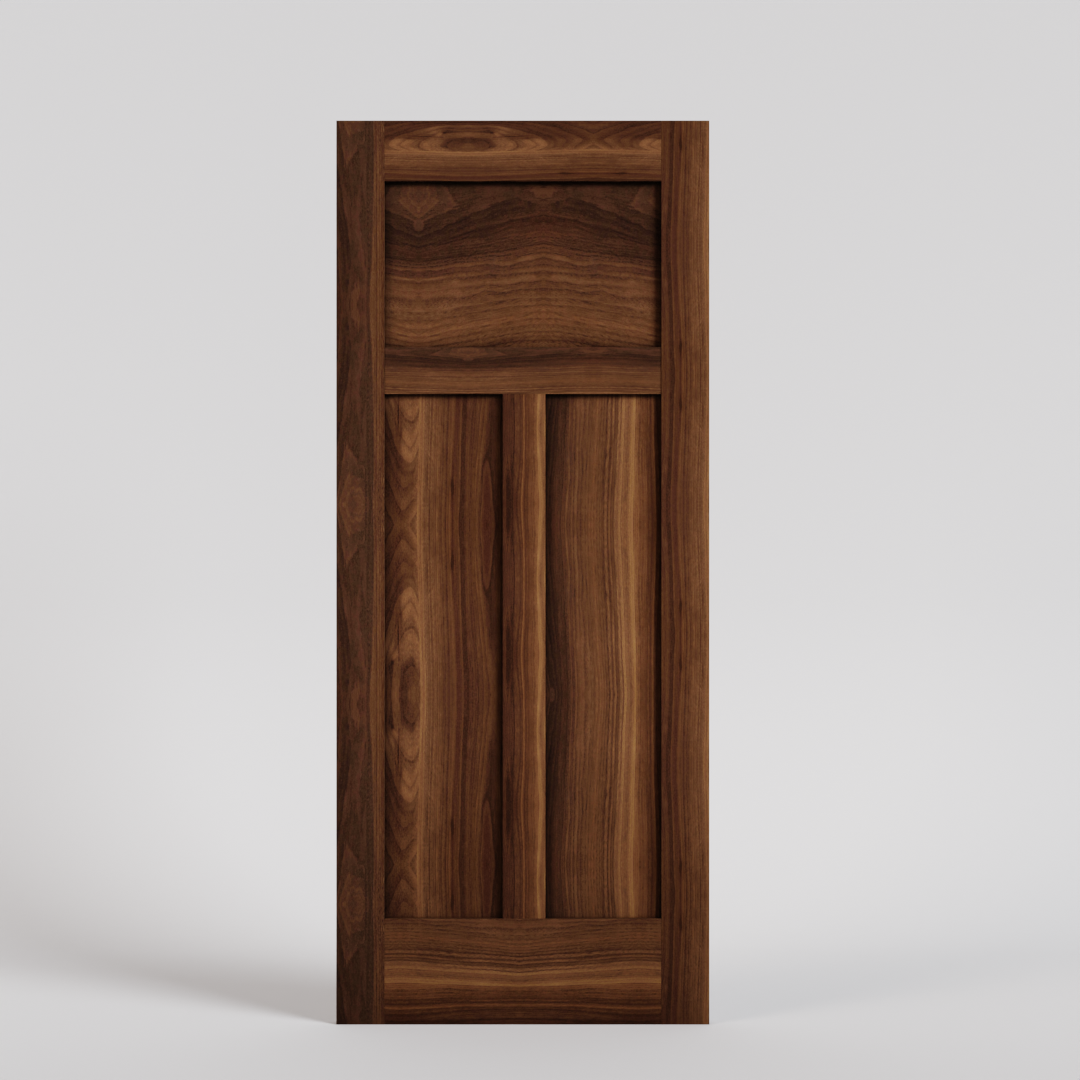
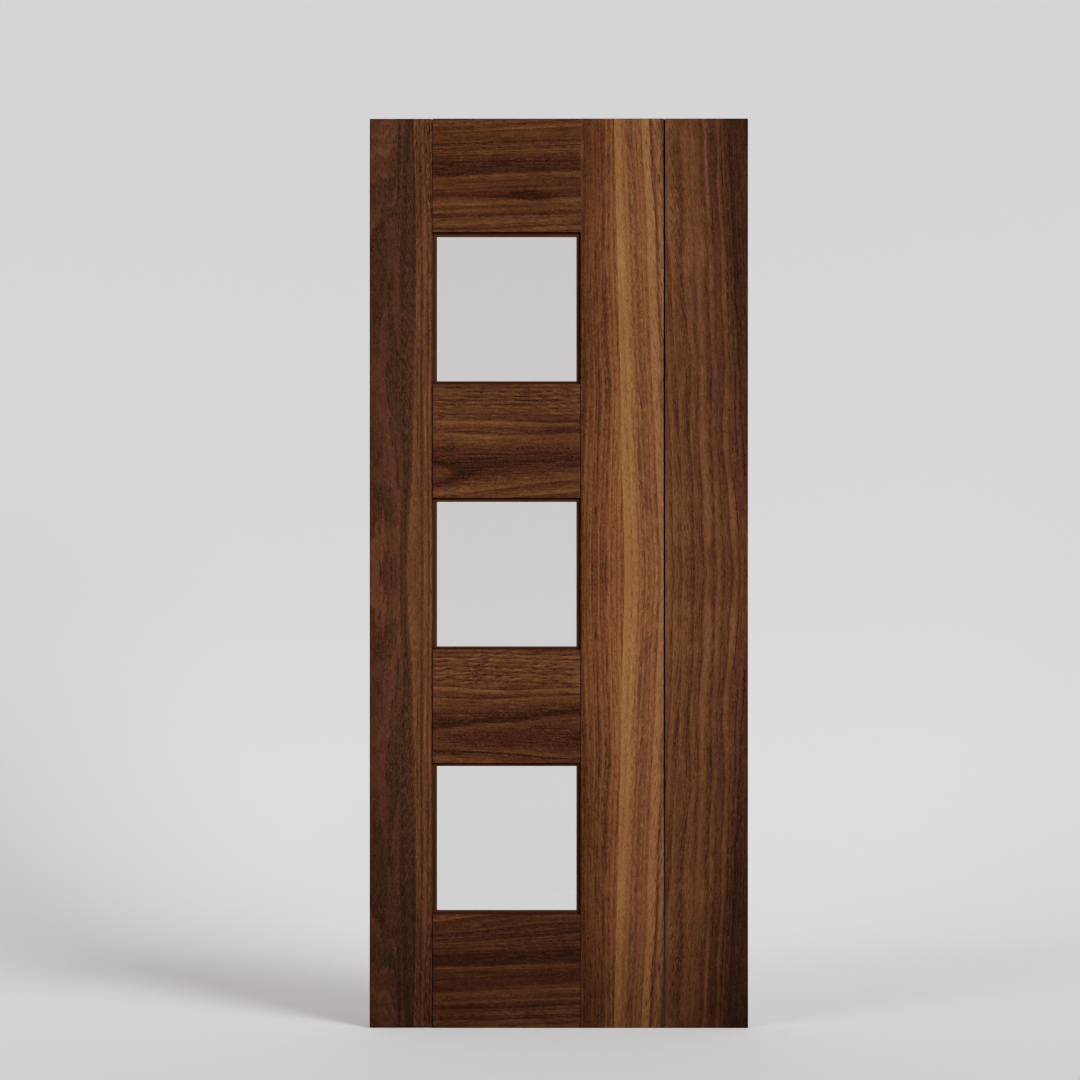
Cost. Entry-level fiberglass doors run from a few hundred dollars for the slab to roughly $3,500 installed for a premium pre-hung unit. Solid wood doors built from true timber start higher because the material and labor are fundamentally different. RealCraft entry doors start at $1,615 for the [Albion Shaker Three Panel](/collections/front-entry-doors) and climb from there — fully custom designs like the [Cambria Basket Weave](/collections/modern-front-doors) surpass $8,000. Installation costs for wood run equal to or somewhat higher than fiberglass because wood is heavier and may require more fitting work. But cost framed as purchase price alone misses the point. A wood door that gets refinished three times over 60 years costs less over its life than two fiberglass replacements, and that's before you account for what a fiberglass door that can't be repaired actually costs when it fails.
Appearance: What Your Hands Actually Feel
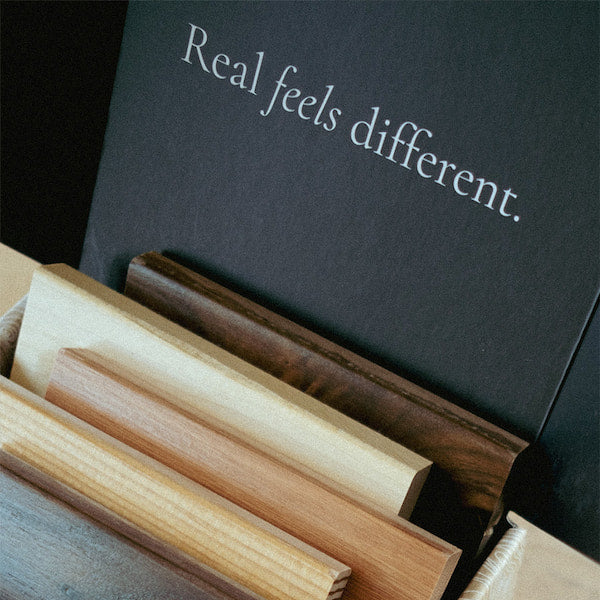
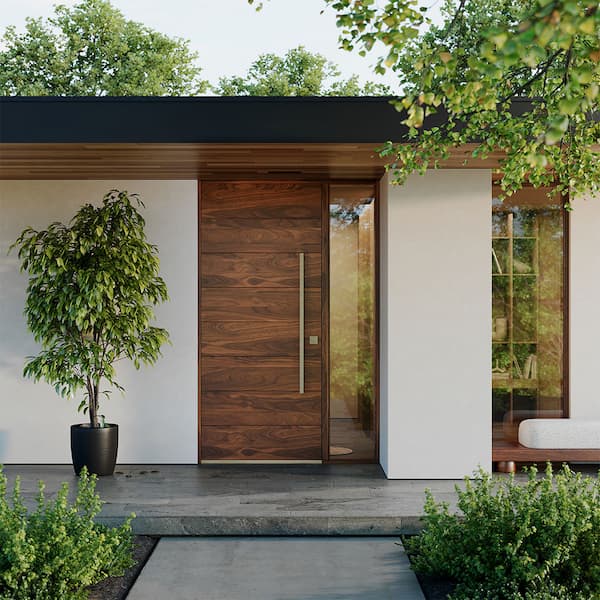
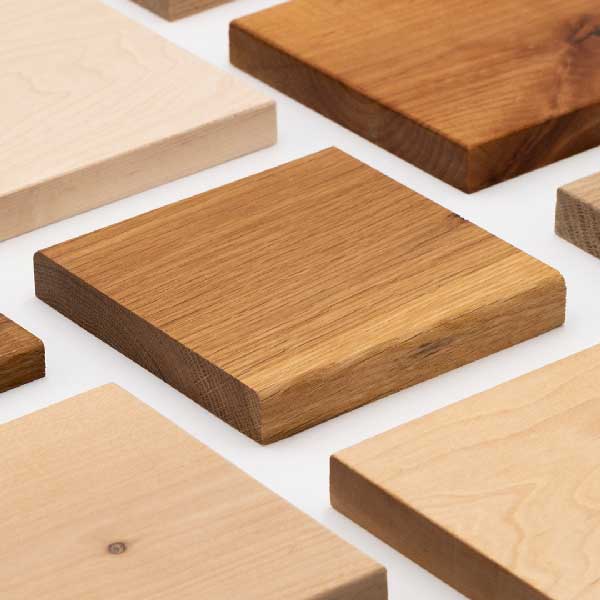
Appearance. This is where the comparison gets physical, and it's the place fiberglass cannot win. Premium fiberglass doors from brands like Therma-Tru use deep-embossed wood-grain skins and gel-stain systems that have improved dramatically. From the street, they can pass. Up close, the grain pattern repeats. There's no ray figure. No medullary fleck in the quartersawn white oak. No mineral streaks in the walnut. No figure that varies board to board because no actual tree produced it. [Solid wood across over 20 species](/pages/wood-species), from the golden caramel of Western Red Cedar to the deep chocolate of Sapele Mahogany to the pale precision of Maple, produces surfaces that a mold simply cannot replicate. Your front door is the first thing anyone touches when they enter your home. It should feel like the thing it claims to be.

Black Walnut
Our most popular species. Rich chocolate brown with natural variation in every board. Read our deep dive on Black Walnut.

White Oak
Closed grain, naturally resists water penetration. Same wood used for wine barrels and ship hulls for centuries. Everything about White Oak.

Sapele Mahogany
Interlocking grain with reddish-brown luster. Architects in wet climates specify it by reflex. FSC-certified.

Douglas Fir
Native PNW timber. Warm reddish-tan, straight grain. Handles the climate because it evolved in it.
Repairability: The Sleeper Advantage
Repairability. This is the sleeper advantage, and it almost never appears in competitor comparisons. Solid wood is repairable. Sand out scratches. Plane and refinish. Patch dents with wood filler or, for larger damage, fit a Dutchman patch and make it disappear under a fresh coat of stain. A solid wood door with mortise and tenon joinery can be refinished, repaired, and restored repeatedly over its life. Fiberglass can be patched with epoxy repair kits for small dings and scratches. But a cracked fiberglass stile, a shattered corner, deep UV degradation — that door is done. You cannot plane it. You cannot structurally rework it. You replace it. Repair kits run $20 to $60 at the hardware store and they're a temporary patch, not a restoration. A refinished wood door costs more to restore but the result is a door that looks new, not a door that looks patched.
Energy Performance: The Honest Numbers
Energy performance. This is the one category where fiberglass has a clear, measurable edge, and it's important to handle it honestly. A foam-core fiberglass door achieves R-5 to R-6 depending on the foam density and slab construction. A solid wood slab, at R-2 to R-3 for a standard 1-3/4 inch door, is genuinely less insulating by material physics alone. But the framing matters: neither slab alone makes an entry energy-efficient. Air leakage around the door, the quality of the weatherstripping, and the presence and type of glass are what dominate real-world heat loss. A beautifully built solid wood door with tight weatherstripping and properly sealed glass can outperform a leaky foam-core door that's poorly installed. The whole-assembly U-factor matters more than the slab's R-value, and most comparison articles skip this entirely in favor of a single number that makes fiberglass look dominant. If fiberglass manufacturers lead with slab R-value and not whole-door U-factor, ask yourself what they're not showing you.
Credit Where DueWhat Fiberglass Does Better
Credibility requires conceding what's true. Fiberglass has three genuine strengths, and in certain situations, any honest builder should acknowledge them.
Moisture resistance is the first and strongest. Fiberglass is dimensionally stable. It will not swell, cup, or bow with humidity changes. It will not rot. In the Pacific Northwest, where Seattle sees ~39 inches of rain (NOAA 1991-2020 normal) annually west of the Cascades, that matters. A fiberglass door on a fully exposed, south-facing entry with no porch or overhang will handle years of direct rain without structural change. Wood in the same situation would demand a rigorous finish schedule, a rot-resistant species like White Oak or Western Red Cedar, and ideally a protective overhang. Skip any of those, and the wood door will fail.
Lower upfront cost is the second advantage. If your budget is tight and the door must go in now, fiberglass gets you an entry that looks credible and functions for a couple of decades. That's not a small thing. Faster installation is the third. Fiberglass pre-hung units go in fast. Production builders love them for exactly this reason — less labor, shorter timeline, predictable result.
Those are real advantages, and a door company that only builds solid wood should be able to say so without flinching.
The DifferenceWhat Solid Wood Does That Fiberglass Will Never Match
Now the other side.
Real wood grain is unrepeatable. Every board is a record of growing conditions, mineral content, and decades of tree growth. No mold recreates that. When you choose a wood species, from the closed-grain durability of White Oak to the rich reddish-brown of Sapele Mahogany to the pale, even character of Maple, you're choosing a material with identity. Fiberglass offers three to five grain patterns, each an approximation of something real. Close your eyes and run your hand across a solid wood door — then do the same on fiberglass. One is warm and textured with actual grain topography. The other is an impression of texture pressed into plastic composite. They do not feel the same, and the difference registers instantly.
Custom sizing is a structural advantage, not a cosmetic one. Wood doors can be built to any opening. Fiberglass doors come from steel molds in standard sizes. Non-standard or old-house openings, common throughout the Pacific Northwest, demand either a custom wood door or an expensive fiberglass modification that can compromise the slab's structure. RealCraft builds every door to the exact dimensions of the opening it will fill, right here in Gig Harbor, Washington. That's not a marketing claim. It's a consequence of working with solid lumber instead of molded composite.
Longevity, properly framed, belongs to wood. A fiberglass door that serves 25 years and gets replaced is now in a landfill. A solid wood door that serves 60 years and gets refinished twice is still on the house. That's not just economics. It's the difference between a product and a fixture. The solid wood entry door becomes part of the home in a way a replaceable composite door does not.
And then there's the sensory truth. A solid wood door closes with weight. It sounds substantial. Your guests feel it in the latch. That thud, that resistance, that sense of mass — it's not snobbery. It's material honesty. Your entry door should be made from solid wood. Anything synthetic will come across as flimsy.
RegionalThe Pacific Northwest Factor
Where you live changes the math.
In the Pacific Northwest, west of the Cascades, moisture is the dominant environmental challenge. Rain. Humidity. Mild winters with long wet seasons. Architectural styles reflect this: Craftsman homes with wide porches and protective overhangs that shelter the entry. Northwest Modern designs that pair clean lines with natural materials. Mid-Century homes where wood entries with geometric glass are the standard, not the upgrade.
For a deeper dive on regional architecture, read our complete guide to PNW door design. And if your home is a Craftsman, our Seattle Craftsman guide covers which doors belong on those homes specifically.
01Dark paint on south or west-facing doors
Dark paint on any door facing south or west absorbs excessive heat, causing splitting, cracking, cupping, or bowing. The fix is the same regardless of material: choose a lighter finish or ensure the entry is protected by a porch or deep overhang.
How to Choose
The right door for your home depends on questions most comparison articles never ask. Here are the ones that matter.
Is your entry protected? If a porch or roof overhang shields the door from direct rain and sun, wood's maintenance demands are manageable and its longevity advantages kick in. Fully exposed entries need either a fiberglass door or the discipline to maintain a wood door's finish on schedule.
How long will you own the home? If you're planning to stay for decades, the repairability and refinishability of solid wood become economic advantages. If you're moving in five years, fiberglass at a lower upfront cost may be the right short-term math. Different timelines, different math.
Do you care about authenticity? Some homeowners want the door to feel substantial, to age naturally, to carry the character of a real material. Others want a door that looks good, functions, and doesn't demand attention. Neither answer is wrong. But a solid wood door is for the first person, and if you're reading this far, you're probably that person.
What's your tolerance for maintenance? A solid wood door needs its finish refreshed periodically — more often with dark stains in full sun, less frequently with lighter finishes on protected entries. Fiberglass is essentially maintenance-free beyond cleaning. If the thought of refinishing a door every few years feels like burden, the honest answer is fiberglass.
Solid wood doors built with true timber and mortise and tenon joinery are not the cheapest option, the fastest option, or the lowest-maintenance option. They are the most honest option. They are the option that ages into a home rather than wearing out of one. They are the option you can repair instead of replace. And for anyone who's ever closed a solid wood door and felt that weight, that sound, that finality — the comparison was already settled before it started.
FAQSolid Wood vs. Fiberglass FAQ
What does "solid wood" actually mean?
True solid wood — true timber — is milled from solid pieces of raw lumber comprising the full thickness of the door. No fillers, no veneers over MDF, no foam cores. If you're not sure whether a door is real wood, here's how to tell.
Can you repair a fiberglass door?
Small dings can be patched with epoxy kits ($20–60). But a cracked stile, shattered corner, or deep UV degradation means replacement. Solid wood can be sanded, patched, and refinished indefinitely.
Is fiberglass more energy efficient than solid wood?
On paper, yes — a foam-core fiberglass door achieves R-5 to R-6. A solid wood slab runs R-2 to R-3. In practice, air leakage around the door and weatherstripping quality dominate real-world performance. A tightly sealed wood door can outperform a leaky fiberglass one.
What wood species performs best in the Pacific Northwest?
White Oak resists water penetration thanks to natural tyloses that block its pores. Western Red Cedar is native to the region and naturally rot-resistant. Sapele Mahogany brings interlocking grain stability. See all twenty species.
How long does a solid wood entry door last?
30 to 100-plus years with proper finishing and maintenance. A well-built solid wood door can be refinished repeatedly — the door itself doesn't wear out, the finish does.
Built to Order in Gig Harbor, Washington
Every door is made from true timber by a small team of expert artisans using mortise and tenon joinery. Twenty wood species, custom-sized to your exact opening. Free shipping on orders over $399.
Shop Entry Doors Order Wood Samples — 5 for $25



Leave a comment (all fields required)